Author: Melanie Rowles
-
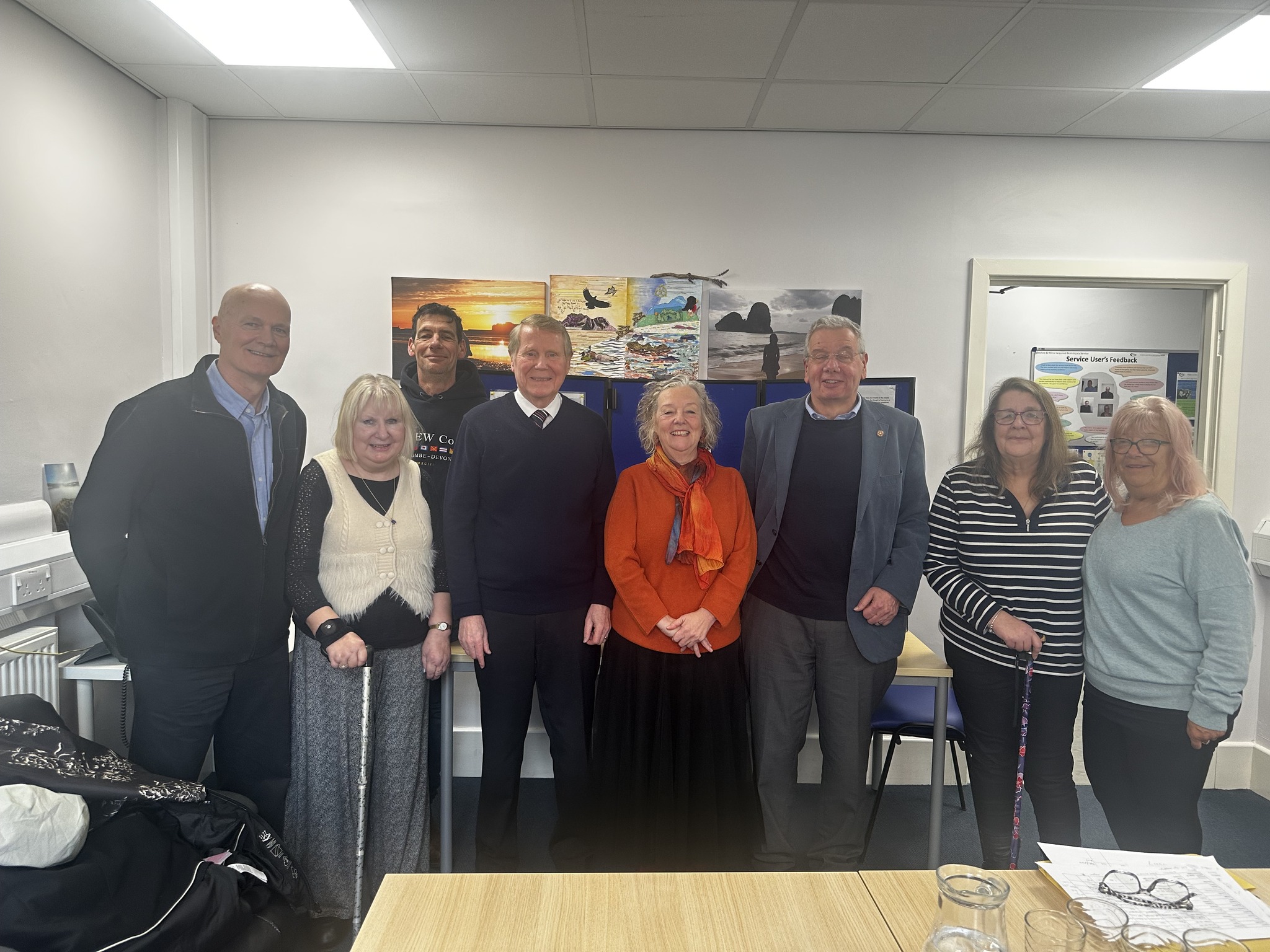
Kings Award for Voluntary Services
We have been nominated for this prestigious award fingers and toes crossed lets wait til November to learn if we win!! -
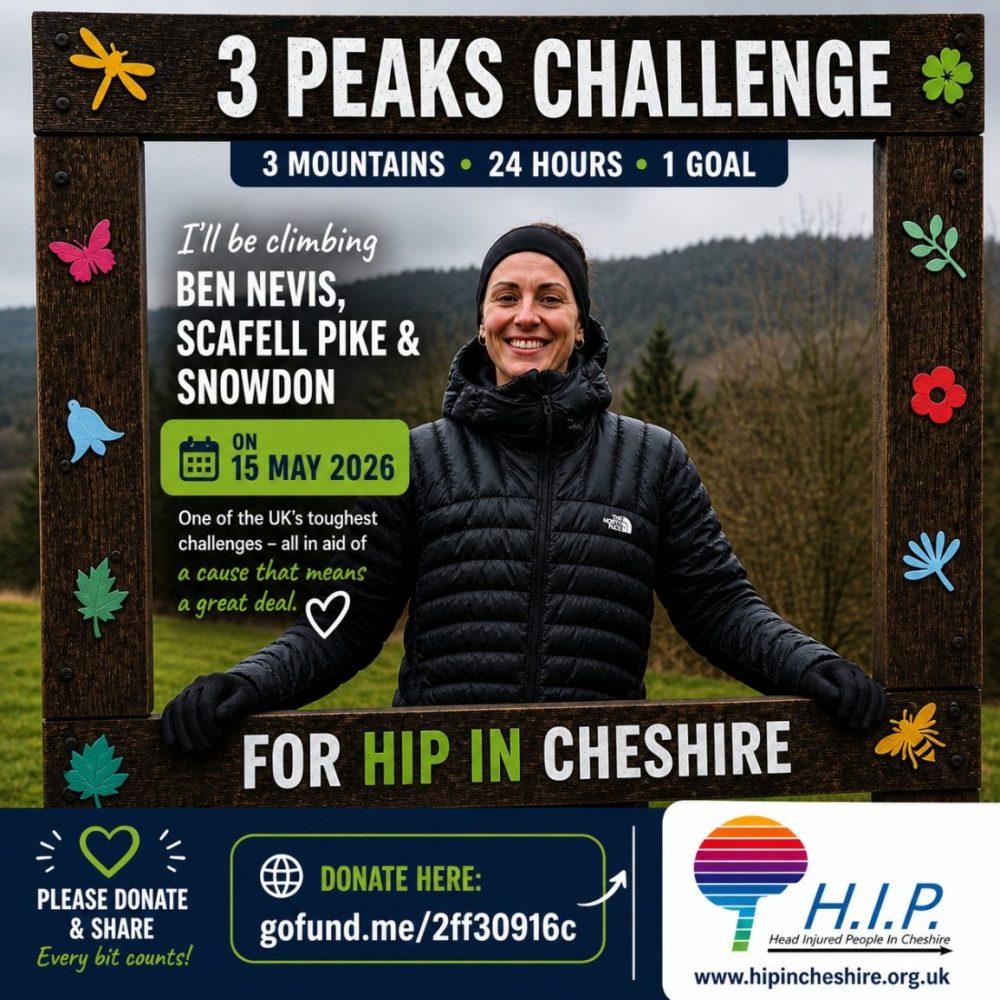
Claire tackles the 3 peaks to take HIP to the top
Please share – On the 15th of May 2026 Claire is taking on the 3 Peaks Challenge to raise funds for HIP (Head Injured People in Cheshire). This is a cause that means a great deal to her and every donation will help make a real difference.
If you’re able to support or even just share it would be really appreciated. Please donate using the link below:
https://gofund.me/2ff30916c” -

DRIVING AFTER A BRAIN INJURY
Driving After Brain Injury: Guidance and Considerations
Legal Responsibilities, Assessments, and Support
Legal Requirements and Responsibilities
If you drive and have had a brain injury, you must inform the licensing authorities. This applies to any ‘notifiable’ condition which could affect your ability to drive and failure to inform the authorities could result in a fine of up to £1,000. It would also mean that your licence is not valid and that you would be uninsured in the event of an accident.
Medical Standards and Driving Restrictions
As a general rule, the medical standards state that after a traumatic brain injury drivers with an ordinary car or motorcycle (Group 1) licence should cease driving for 6 to 12 months, depending on factors such as post-traumatic amnesia, seizures, and clinical recovery. Other forms of acquired brain injury have slightly different rules, but if there are lasting impairments which affect driving ability then the licence is likely to be removed for a period.
However, because every brain injury is different, each case is considered on an individual basis.
Further Information and Resources
Further information on the legal requirements, rules for professional drivers and how to inform the authorities is contained in the Headway booklet Driving after brain injury .
Overview and Coping Strategies
The document provides information and guidance on driving after a brain injury, including legal responsibilities, potential effects on driving skills, and coping strategies for those unable to drive.
Key Considerations
Driving After Brain Injury: Key Considerations
- Brain injuries can significantly impact driving abilities and safety.
- It is essential to report any brain injury to the relevant licensing authority for appropriate assessments.
Assessment of Driving Ability
Importance of Driving Ability Assessment
- A driving ability assessment can determine if a brain injury affects driving skills.
- This assessment can save money by informing whether driving lessons are advisable.
Motability Scheme
Understanding the Motability Scheme
- The Motability Scheme allows individuals receiving mobility allowances to lease vehicles.
- Nominated drivers can operate the vehicle for the benefit of the allowance recipient.
Reporting to Licensing Authorities
Licensing Authorities and Reporting
- Different licensing authorities exist for England, Wales, Scotland, Northern Ireland, Jersey, and Guernsey.
- It is crucial to inform the appropriate authority about any medical conditions affecting driving.
Emotional Support and Resources
Emotional Support and Resources
- Emotional impacts of losing driving ability can include sadness and anxiety.
- Support is available through HIP
- Licensing Authority Response Times and Guidance
How long does it take to hear back from my licensing authority? It can take several weeks or months to hear back from a licensing authority. Your licensing authority will aim to make a decision as quickly as possible, but they will also be relying on information from doctors or other health professionals, which can make the process take longer. Please be patient while they are making a decision, as they will not be able to provide updates. In the meantime, you may find advice in the section Coping without a driving licence helpful.
Can I drive while waiting to hear back from my licensing authority? Your GP or other healthcare professional will be able to advise on whether you can drive while waiting to hear from your licensing authority. Doctors and healthcare professionals who need guidance on safety to drive may find the following resources helpful: UK government guidance Assessing fitness to drive – a guide for medical professionals; UK government guidance Neurological disorders: assessing fitness to drive; Drivers in England, Scotland or Wales may find the DVLA’s leaflet Can I drive while my application is with DVLA? helpful for further information.
Waiting for a Decision
It may take several weeks or months to hear from your licensing authority. They must gather information from doctors or other health professionals before deciding. If you have a brain injury, ask your healthcare team for help with forms or communication. Please be patient—updates cannot be given until a decision is made.
Practical Tips for Coping Without Driving
Losing the ability to drive can be difficult, but there are ways to stay independent:
- Use public transport like buses and trains—discounts may be available for people with disabilities.
- Look for local community transport schemes offering door-to-door services.
- Ask family and friends for lifts, or use taxi and ride-share services.
- Plan journeys ahead and try helpful apps for booking or navigation.
If you need emotional support, contact specialist brain injury organisations and helplines—they can help you adjust and find new routines.
-

Fiona’s Story
By Fiona Todd

Today
There’s a shimmering sunrise in my brain,
The darkness has dissipated , Replaced by light.
The tumultuous storm has burnt itself out.
Today,
I will do the things I’ve longed to do.
Live, breather, experience joy,
Bathe in the sunlight of my innermost illumination.
Until the tempest rages again.
Tomorrow, Brings blackness, obscurity, Deficiency of light. Yet it will pass and become a yesterday,
Followed by another today.
-

Members Poems reflecting their Journey
On a good day I can face the challenges of the day and have clarity of thought and feelings.
I can manage my anxiety and keep it at bay, my memory is clear, and I do not falter
On a good day I do not have to think about my fatigue and non-alcoholic hangover
I can go about my day without having to trying to predict my low physical and mental points
On a good day I have no rain clouds hanging over my head which brightens the world
I can get out of bed and greet the day and all it has to offer with open arms
On a good day I can embrace the rollercoaster of life, and get off when I want to
I can plan my day and not get distracted by thoughts and feelings
On a good day I can tell myself and accept that bad days will pass
I can remember words and what I want to say, my confidence is back and brimming
On a good day I can smile and shrug of the challenges of life and negative thoughts
I can embrace the new me and dispel confusion life sometimes brings knowing I am still here
On a good day I can reflect and work towards my life plans without a daily list
I can accept my hidden challenges of how the world sees me and how I see the world
On a good day I can accept the loss of the old me and know this me is not coming back
I can continue learning about the new me, and adapt to this new opportunity
-

Fatigue
- “It’s like my brain just shuts down…I can’t communicate or think anymore”
- “I try to sleep but my head just whirs around, or I do sleep but don’t wake up feeling refreshed”
- “Friends and family think I’m lazy or not motivated as I let them down at the last minute, or have to leave early”
Fatigue affects many people at some point in time, but it’s not always understood as a significant consequence of brain injury. This type of fatigue feels completely different; more intense, longer lasting, and doesn’t necessarily seem to relate to what we have just done. And it doesn’t seem to go away after rest either… so what’s going on? Why does fatigue occur? And what can we do about it?
Our brains control everything we do, what we think and feel, and the pace at which this happens. After a brain injury, it seems as if more physical and mental energy is needed for daily life and it feels as if this energy drains far more quickly than before. It’s like having lots of apps open at once on a smartphone; things slow down and the battery drains very quickly until ‘the computer says no’! This is frustrating, can feel unpredictable and difficult to explain. Fatigue can impact work, family and social life, as we may struggle to keep up with conversations, feel more irritable, find it hard to make decisions and keep cancelling plans as we feel too tired. It seems to make other consequences of the injury even worse!
Despite physical and mental fatigue being so commonly reported, scientists are uncertain exactly what fatigue is and why it occurs. They do agree that many different factors contribute to everyone’s experience of fatigue; these can include physiological, cognitive, physical, emotional, personal and social factors. It takes a lot of detective work to figure these out for each person, what particular activities or situations may be triggers, and what combination of management strategies are likely to help each individual.
There are things that, in combination, can help and information is available on the Headway website, for example this article on coping with fatigue.
However, it’s not easy to use these strategies in our daily lives consistently. A healthy diet, exercise and getting a good night’s sleep are common sense but can be difficult to implement after brain injury for a variety of reasons. Changes to mood and emotions are not easy to manage without support from people who understand, and we at HIP aim to help with other professionals to support and share strategies. Strategies to compensate for memory slips may seem logical, but hard to action in the moment. And pacing – an easy thing to say, but it’s not as simple as having a break every few minutes!
There is no quick fix or magic pill to take, although scientists are looking, so do speak to your doctor about whether medication may help. There may be other medical conditions affecting your energy levels to consider. Working with an occupational therapist is a good idea, as they can work with you to find out what factors are relevant for you, how to make activities take less effort, and manage the environment to help you process information more effectively so you can participate in the activities you value most. Sometimes fatigue improves, it may even go away, but some people may need to be more consciously aware of their energy levels on a day-to-day basis.
To cope with fatigue you must first be able to recognise it. So how do you know when you are getting fatigued or fatigue starts to build up?
The most important thing that you can do is to learn to ‘tune in’ to your body. Fatigue is your body’s way of telling you to slow down and rest. Learning to spot the early signs of fatigue in your body can help you manage it effectively.
Some signs may include:
- yawning
- losing concentration/attention
- eyes feeling heavy, or eyesight blurring
- head feeling ‘fuzzy’
- fidgeting/getting irritable
- limbs feeling heavy
- stomach feeling sick
You can also start trying to identify situations that cause you to feel fatigued. For example, if you notice that travelling on the bus makes you feel fatigued, then next time you need to travel on a bus you can plan your day more carefully to minimise the impact of this.
It may take time to work out what your triggers are, so fatigue might feel difficult to control. However, it is likely that certain activities are more tiring for you; what are these? People around you may be able to help you to identify what these are.
You might want to consider monitoring your fatigue by rating how tired you feel before and after different activities, perhaps on a scale of 1-10. This may give you an idea of which activities you find fatiguing.
It is important to recognise those activities or situations that are more tiring so that you can plan for them in your daily routine. Once you are aware of which activities are tiring, then you can prioritise and set realistic targets of what is achievable in a day.
Sharing experiences is a good place to start as it can feel so confusing and that’s where HIP comes in we through our informal meetings and support groups provide a safe place to share.
-

Ben Thexton our Treasurer ran the London Marathon to raise awareness of Acquired Brain Injury with a broken HIP !- no pun intended
Beating the Odds
Ben Thexton is our Treasurer and a Trustee who works so hard for us. He ran the London Marathon to raise awareness of ABI he too has experienced a brain injury as has is brother, quite a stunning coincidence. Ben decided more needs to be done to research into Brain Injury as well as support those who have experienced one. So he ran to raise much needed funds for Brain research UK.
Ben felt pain in his hip when he had more miles to go, but thought it was muscular, and kept going only afterwards did he realise he had been running on a fractured hip. A true trooper and an incredible achievement, this is indicative of what our volunteers do for us and also other Brain injury charities.
Brian injury is not publicised widely and yet every 90 seconds someone in the UK will have one and the ripples of it go wide. Ben has also written an amazing book about his journey called an unexpected journey available on Amazon.

-

Nantwich ‘unoffical’ coffee morning August 2023
Nine members from Oswestry & Nantwich met for an ‘unofficial’ coffee morning yesterday at Welch’s on Hospital Street. As there are no coffee mornings in August, trustee Ian Skaife and Alyson organised one.
Roger Austin, owner of Welch’s, and his team gave us a great welcome and some of their special coffee and tea – and even some shortbread biscuits! They gave us a good discount too – thanks Roger & his brother Stuart.
We shared stories of holidays and events we had been too, and Viv told us about her volunteering at the RSPCA animal rescue centre at Stapeley.
Ian updated those who were there about some changes in trustees and staff and there were some good suggestions of things we might do in the future.
Great to see everyone and hopefully some of us will be at the Crewe coffee morning on 7th September.
